If you run iron in Australia, you already know the dirty secret: the “best” part is the one you can get fast, that fits first go, and doesn’t come back to haunt you three weeks later.
Terrappe’s local inventory is built around that reality. Hydraulic components, filters, seals, track gear, buckets, undercarriage and wear parts, broad coverage, short lead times, and enough depth in the high-churn categories to keep machines earning instead of waiting.
One line that matters more than any brochure copy: 92% of forecast project need is expected to be met from locally sourced, in-stock components inside 48 hours of demand (Terrappe internal stock coverage forecast, AU operations).
That’s a strong number. It’s also not magic. It only holds if you match parts to your exact machine population, your regions, and your seasonal spikes.
Stock coverage: the quiet KPI that decides your maintenance calendar
Some people treat inventory as a purchasing problem. It’s not. It’s a production problem.
As Terrappe have a range of earthmoving parts in Australia, its Australian stock profile leans into the categories that typically blow up schedules: buckets and bucket wear systems, undercarriage, track parts, and high-turn service items (filters, belts, seals). The operational win isn’t just “in stock.” It’s in stock within the depot network that matches where your fleet actually works, because regional transit time is the hidden tax.
Here’s how I’d evaluate coverage if I were sitting in your chair:
– Fill rate by district, not “national fill rate” (national averages hide pain)
– Backorder days for critical SKUs (undercarriage, hydraulics, electrical protection)
– Stock turns in the top 100 maintenance items (turns tell you if the mix is honest)
– 48-hour availability for planned maintenance kits vs breakdown items
And yes, environmental impact does sneak into the decision now. Local sourcing reduces logistics miles, but don’t over-romanticise it, if local stock means a shorter life part, your carbon story can get worse, not better, once you count replacements and call-outs.
“Will it fit?” is a systems question, not a catalogue question
Look, part matching isn’t hard when things are simple. It’s hard when your fleet is real: mixed vintages, rebuilt machines, swapped attachments, serial breaks, and aftermarket modifications that nobody wrote down.
Terrappe’s strongest approach here is BOM-level mapping plus serial/tag validation. That’s the difference between “this fits a D8” and “this fits your D8 with that arrangement code and this hose routing.”
What good part-to-model matching actually uses
Not a long list, just the right inputs:
– BOM crosswalks tied to machine family + serial range
– OEM references plus field failure history
– Dimensional/tolerance bands (ports, seals, connectors, fasteners)
– Return/rejection rates feeding the mapping rules (the feedback loop matters)
I’ve seen fleets cut warranty noise dramatically just by tightening that last point: treat every mis-pick as data, not as “operator error.”
A slightly nerdy (but useful) way to score compatibility
Compatibility shouldn’t be “yes/no.” It should be a scorecard.
You’re weighing seal sizes, connector types, hydraulic port geometry, fastener standards, and even material behaviour under load. Then you add supply-side reality: lead time, depot location, substitution rules.
If you want a pragmatic framework, build a compatibility score per SKU that blends:
– Fit certainty (serial validated vs “likely”)
– Swap success rate (how often it installs without rework)
– Lifecycle performance (wear rate + MTBF)
– Lead time risk (including replenishment cadence)
This is where version control matters more than people think. Suppliers revise specs. Catalogues lag. A “living compatibility file” with an audit trail saves you from repeating old mistakes.
Supplier evaluation: don’t get hypnotised by price lists
If a supplier can’t show reliability data, they’re guessing, and you’ll pay for their guess.
For Terrappe’s supplier base (and any competitor’s, frankly), you want evidence that survives scrutiny: on-time delivery, MTBF, first-time fix rates, and a warranty policy that matches your shift pattern and site access constraints.
I’d run a weighting rubric that punishes two things heavily:
- Slow approvals (because downtime doesn’t care about your procurement workflow)
- Weak traceability on critical parts (especially hydraulic and safety-adjacent components)
Quick approvals aren’t administrative fluff. Faster onboarding means you can shift spend toward the suppliers who actually perform, while the project is still alive.
Seasonal demand in Australia: you can’t “just-in-time” your way out of weather
Now, this won’t apply to everyone, but if your work is tied to civil programs, quarry output, or remote earthworks, you already feel the pattern: seasonal spikes show up, parts move slower, and suddenly every depot is chasing the same SKUs.
The planning discipline that works is boring, but effective:
– Identify 3, 5 risk windows each year per region (wet season impacts, project ramps, shutdown clusters)
– Set tiered reorder points for belts, filters, track components, and seals
– Reforecast monthly, then adjust within 1, 2 weeks when weather or project calendars shift
– Watch turnover so you don’t bury cash in slow-moving oddities
Here’s the thing: forecasting isn’t about being right; it’s about being less surprised than the next contractor.
One-line truth:
Planned downtime is a choice; unplanned downtime is a tax.
Wear parts: where durability turns into dollars (fast)
Wear parts aren’t glamorous, but they’re the easiest place to buy real uptime. Terrappe’s pitch here is material performance, hardness/toughness balance, abrasion resistance, corrosion resistance, dimensional stability, backed by field behaviour, not just lab numbers.
Reported field results often show 15, 25% longer service intervals with optimized material composition versus standard alloys, and corrosion resistance improvements that can reduce replacement frequency by up to ~20% under wet/dusty/chemically exposed conditions (manufacturer field testing summaries; validate against your own site data).
My opinion: don’t chase the longest-life part blindly. Chase the part that fails predictably and can be swapped quickly. A slightly shorter-life component that’s consistent can beat a “miracle alloy” that cracks without warning.
Downtime reduction that’s actually repeatable
A few strategies I’ve watched work across mixed fleets:
– Use predictive triggers to swap before failure thresholds, not after symptoms
– Track failure modes by asset and site (same machine behaves differently in different ground)
– Keep a rotating spare set for the top outage drivers (undercarriage bits, hydraulic seals, filtration kits)
– Tie procurement to usage trends, not budgets (budgets lie; usage doesn’t)
Practical buyer’s notes (filters, seals, tracks, and the stuff that ruins your day)
Some categories deserve a quick, blunt checklist.
Filters: Dirt-holding capacity and pressure drop behaviour matter more than branding. If differential pressure rises too fast, you’re not protecting the system, you’re starving it.
Seals: Match elastomers to real exposure. Dust, heat, hydraulic chemistry, and wash-down practices will punish “close enough” choices. Leakage isn’t just mess; it’s lost performance and accelerated wear.
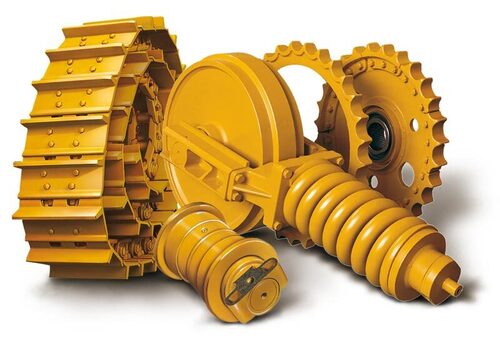
Tracks & undercarriage: Assess by wear life and maintenance rhythm. A track that lasts longer but demands constant adjustment can still lose on total cost of ownership.
Hydraulics and electrical components? Verify pressure tolerances, cooling behaviour, and circuit protection against OEM specs and field history. If the supplier can’t show traceability and QA process, don’t pretend it’s a “minor risk.”
The part that most teams miss: aligning inventory to your fleet, not “the market”
Terrappe’s Australian inventory coverage is broad and, by the numbers, responsive. The leverage comes when you stop treating it like a catalogue and start treating it like a fleet model: your top machines, your common failures, your depots, your seasons.
That’s where the reliability metrics improve, the maintenance costs calm down, and procurement turns into something closer to an engineering function (which, honestly, it should be).